
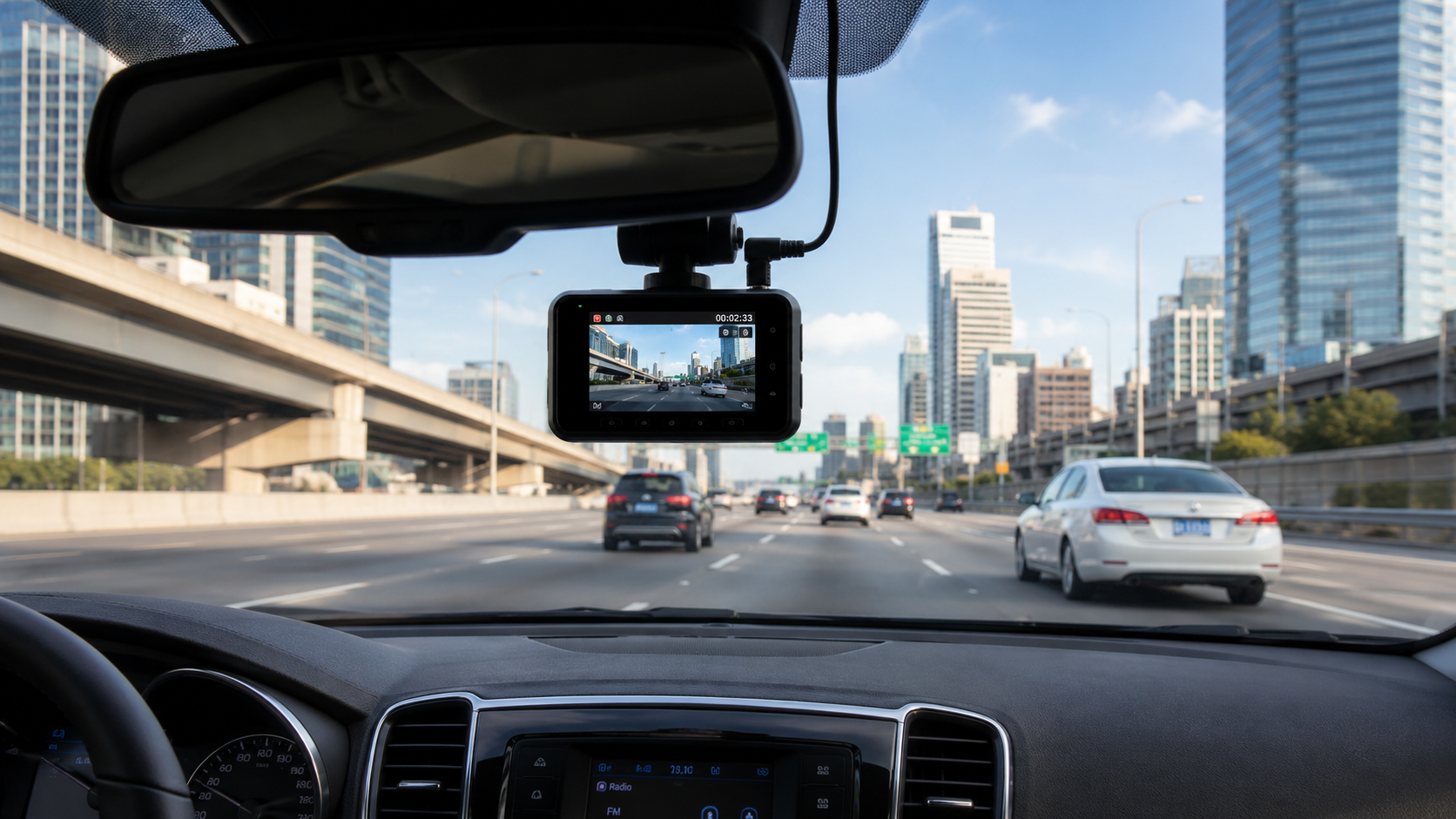
Dash cams are becoming more advanced, but privacy laws are also changing. Drivers now need to understand when recording is allowed, how audio consent laws apply, and what privacy risks come with sharing footage online.
Why Dash Cam Privacy Laws Are Becoming More Important
Dash cams used to be simple recording devices. Today, many models include GPS tracking, cloud storage, audio recording, parking mode, driver monitoring, and AI-powered event detection. These features can help document crashes, road rage incidents, and unsafe driving, but they also raise privacy concerns.
In 2026, more drivers are using dash cams for everyday protection. Rideshare drivers, delivery drivers, commuters, parents of teen drivers, and fleet managers rely on footage to better understand what happened during an incident. However, recording public roads does not always mean every type of recording is allowed.
Privacy issues often arise when a dash cam records conversations, passengers, pedestrians, license plates, homes, businesses, or accident victims. A video that seems useful after a crash may create legal problems if it was recorded or shared improperly.
For more background on accident documentation, read our guide on “Dash Cam Evidence: What Makes Video Admissible in Personal Injury Cases”.
Can You Legally Use a Dash Cam?
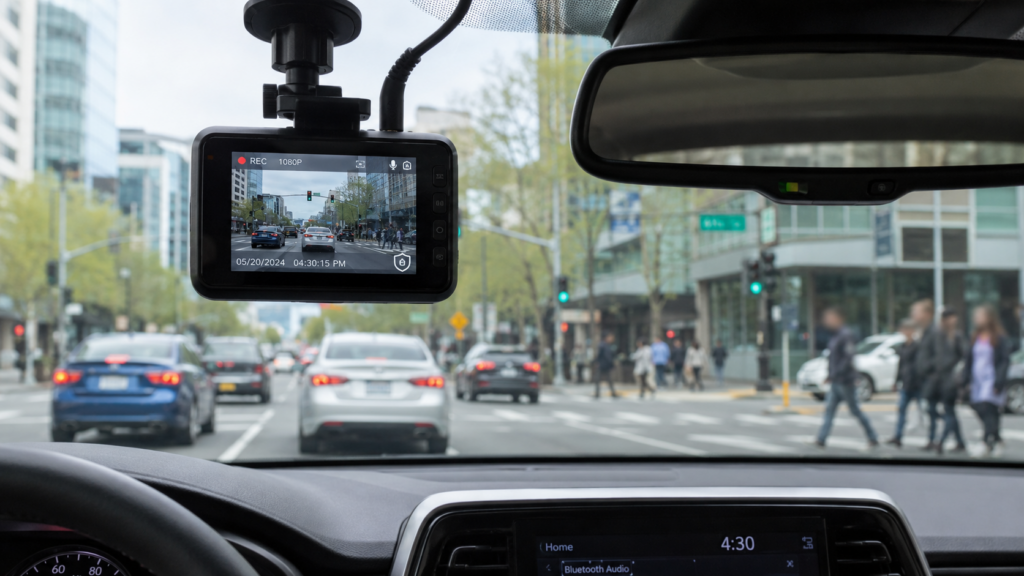
In many places, drivers can use a dash cam to record public roads. Roads, intersections, highways, and parking lots usually have a lower expectation of privacy than private spaces. However, the legal issue becomes more complicated when the camera records audio or captures people in sensitive situations.
Some states have one-party consent rules for audio recording, while others require all parties to consent before a conversation is recorded. This means a dash cam with audio turned on may create problems in certain states if passengers, rideshare customers, or other people inside the car are recorded without permission.
The Reporters Committee for Freedom of the Press provides a helpful state-by-state guide about recording laws. Drivers can use it as a starting point to understand audio consent rules in their area.
Key Privacy Concerns With Dash Cams
Dash cams can capture more than a crash. They may record conversations, faces, addresses, license plates, children, emergency responders, medical treatment, and private property. These details matter because dash cam footage can spread quickly when uploaded online.
One major concern involves sharing footage on social media. A driver may want to post a video of a crash, near miss, or reckless driver. However, public posting can expose victims, minors, private conversations, and identifying details. In some cases, sharing footage may affect an insurance claim, police investigation, or personal privacy rights.
Another concern involves cloud-connected dash cams. Some modern devices automatically upload clips to an app or online account. This feature is convenient, but it also means drivers need to protect passwords, review privacy settings, and understand how long footage is stored.
The Federal Trade Commission offers general privacy and security guidance that applies to connected devices and personal data protection.
Audio Recording Rules Drivers Should Know
Audio recording is one of the most important dash cam privacy issues. A camera that records only video may be treated differently from one that also captures conversations inside the car.
In one-party consent states, one person involved in a conversation can usually record it. In all-party consent states, everyone involved in the conversation generally needs to agree. This can affect rideshare drivers, taxi drivers, company drivers, and anyone who frequently has passengers.
Drivers who use dash cams with passengers may consider turning off audio recording when it is not needed. Another option is placing a visible notice inside the vehicle stating that audio or video recording is active.
The Justia 50-state survey on recording conversations explains how consent laws vary across the United States.
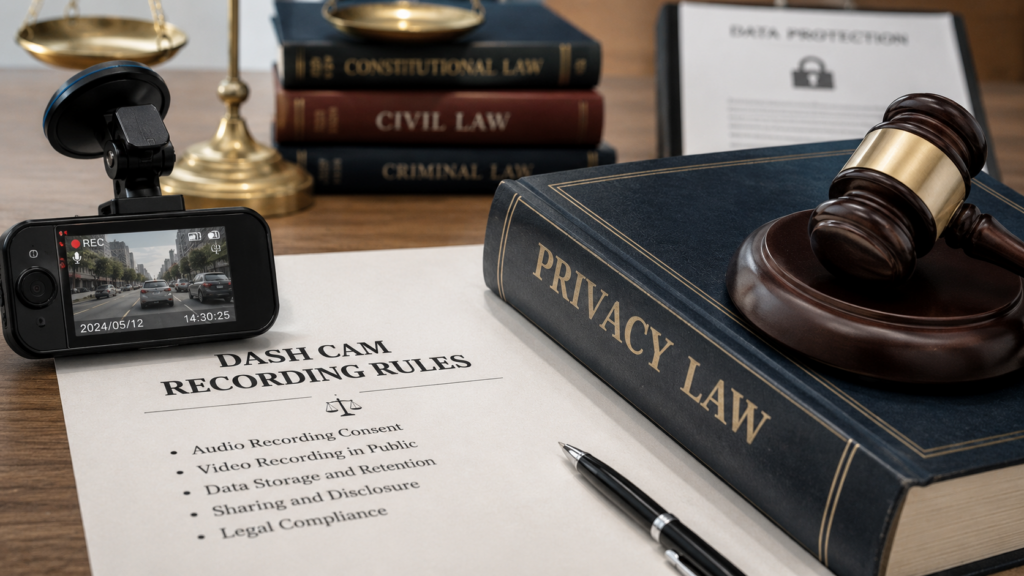
Where Dash Cams Can Create Legal Problems
Dash cams may create legal problems when they are installed improperly or used in a way that violates privacy rules. For example, a dash cam should not block the driver’s view of the road. Some states restrict windshield-mounted devices, while others allow them only in specific areas of the windshield.
Drivers should also avoid pointing cameras into private spaces where people have a reasonable expectation of privacy. Recording inside garages, homes, medical facilities, restrooms, or private offices can raise serious privacy issues.
Dash cam footage may also become problematic when edited, misrepresented, or posted without context. A short clip may not show everything that happened before or after an incident. Sharing incomplete footage can lead to misunderstandings or legal disputes.
Can Dash Cam Footage Be Used After an Accident?
Dash cam footage can be useful after an accident if it was legally recorded and properly preserved. It may show vehicle positions, traffic light changes, lane movements, road conditions, weather, and impact sequence.
However, footage may become less useful if it is blurry, edited, incomplete, or recorded in violation of privacy laws. Drivers should save the original file, avoid altering the clip, and back it up securely.
The National Highway Traffic Safety Administration provides general road safety resources that can help drivers understand crash prevention and safe driving practices.
For readers interested in camera-based accident documentation, our article on AI dashcams and smart crash detection covers related technology trends.
Best Practices for Using a Dash Cam Responsibly
Drivers can reduce privacy risks by using dash cams carefully. The first step is reviewing local laws before recording audio or mounting a device on the windshield. Laws can vary by state, and some cities or workplaces may have additional rules.
Next, drivers should check their device settings. Many dash cams allow users to disable audio recording, adjust parking mode, limit cloud uploads, or delete older footage automatically. These settings can help protect personal information.
Drivers should also avoid posting accident footage online without considering privacy. If a video must be shared with police, an insurer, or a legal representative, it is better to provide the original file privately instead of uploading it publicly.
- Review state audio consent laws before using in-cabin recording.
- Keep the dash cam from blocking the windshield view.
- Turn off audio when it is not necessary.
- Store footage securely using strong passwords.
- Do not post crash videos online without considering privacy issues.
- Save original files after an accident.
- Delete old footage that no longer needs to be stored.
Dash Cams, AI, and the Future of Road Privacy
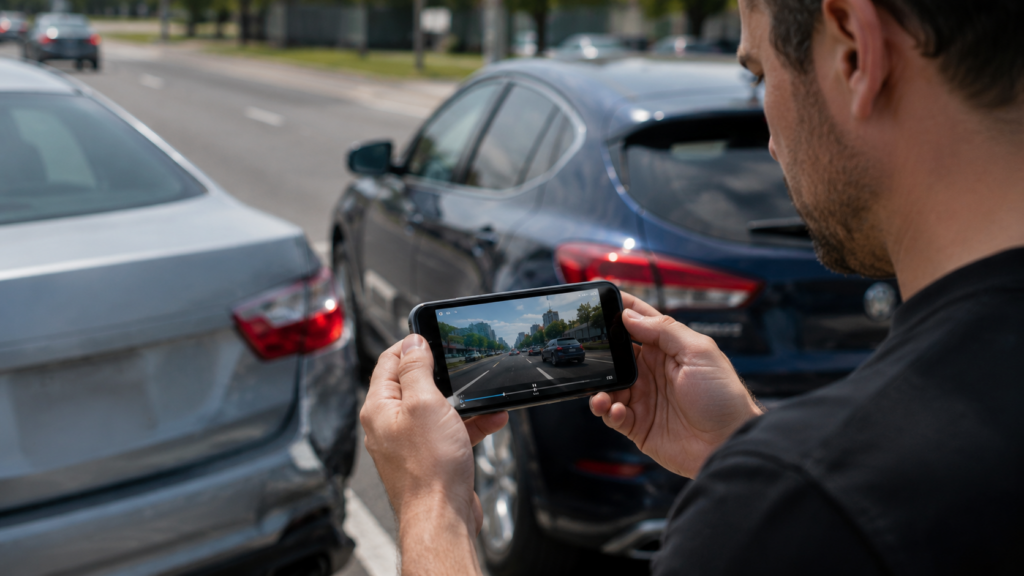
New dash cams are becoming smarter. Some devices can detect crashes, identify lane departures, recognize traffic signs, and send alerts to emergency contacts. These tools may help improve road safety, but they also collect more data than older cameras.
AI-powered dash cams may record driver behavior, eye movement, speed, braking patterns, and location history. Fleet systems may also monitor employees throughout the workday. These features create additional questions about notice, consent, data ownership, and workplace privacy.
The Electronic Frontier Foundation regularly discusses digital privacy concerns, including how technology can affect personal rights.
As dash cams become more connected, drivers may need to think beyond crash footage. Data security, privacy settings, and responsible sharing are now part of owning modern vehicle technology.
What Drivers Should Do After Capturing an Accident
After a crash, drivers should preserve the dash cam footage as soon as possible. Some cameras overwrite older clips automatically, especially if the memory card is full. Saving the file right away can prevent accidental deletion.
Drivers should avoid editing the footage before sharing it with police or an insurer. The original file may contain metadata such as time, date, speed, and GPS information. Editing can remove or alter that information.
It may also help to write down basic details while they are fresh. This includes the date, time, location, weather conditions, vehicle descriptions, and names of responding agencies. Footage works best when it supports accurate documentation.
The Insurance Institute for Highway Safety offers information about advanced driver assistance systems and vehicle safety technology.
Conclusion
Dash cam privacy laws are becoming more important as cameras become smarter, more connected, and more common. These devices can help document accidents, but drivers need to understand audio consent laws, data storage risks, and privacy concerns before recording or sharing footage.
A dash cam can be a helpful safety tool when used responsibly. Drivers should review local laws, protect recorded data, avoid unnecessary audio recording, and be careful when sharing videos online.
As vehicle technology continues to change in 2026, privacy awareness is becoming just as important as accident documentation.