
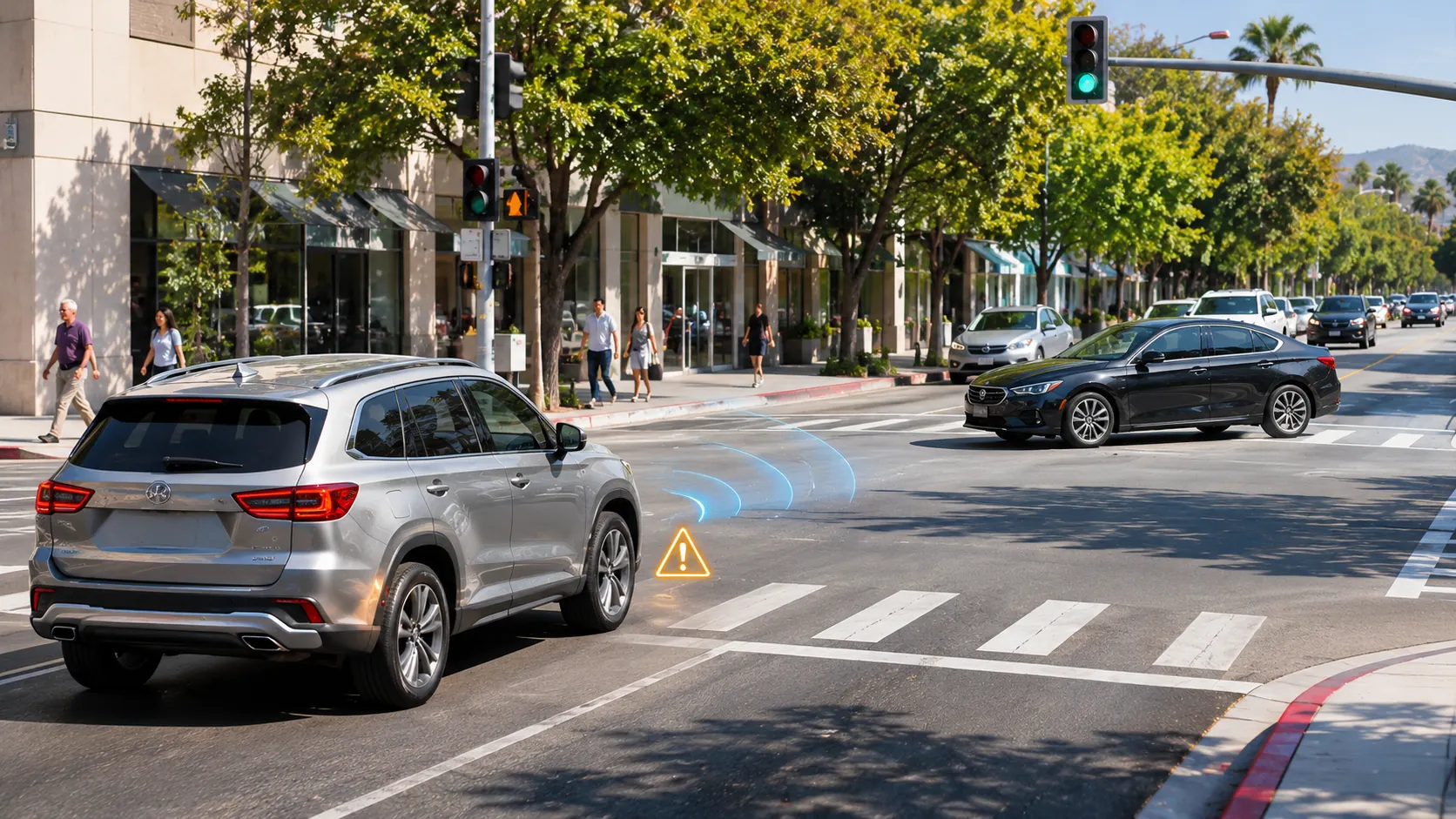
Automatic emergency braking can help prevent crashes, but a new round of testing shows an important gap: a system that handles one intersection conflict may struggle with another. On November 12, 2026, AAA released results from four 2026-model-year vehicles equipped with intersection automatic emergency braking, or intersection AEB. All four avoided a collision in a standardized left-turn scenario, yet three of the four failed to prevent a collision when another vehicle turned into their path from a side road.
The findings do not mean intersection AEB is useless. They show why drivers should understand what their particular system is designed and tested to do. Intersections combine turning traffic, unexpected movements, limited visibility, pedestrians, and traffic signals. Technology may reduce some risks without removing the need for careful judgment.
What Is Intersection Automatic Emergency Braking?
Automatic emergency braking uses cameras, radar, or other sensors to recognize an imminent collision and apply the brakes when the driver has not responded sufficiently. Conventional forward AEB primarily targets vehicles directly ahead, especially rear-end crash situations. Intersection AEB extends this idea to vehicles approaching from different directions or crossing a turning vehicle’s path.
For example, a car preparing to turn left may encounter oncoming traffic. A compatible system may issue a collision alert or brake to help avoid an impact. Other systems may detect a vehicle entering the driver’s lane from a side road. The actual capabilities depend on the model, software, sensors, speed, and driving conditions.
The National Highway Traffic Safety Administration’s driver-assistance guide explains the difference between warning technologies and systems that automatically intervene. Neither replaces an attentive driver.
What AAA’s November 2026 Test Found
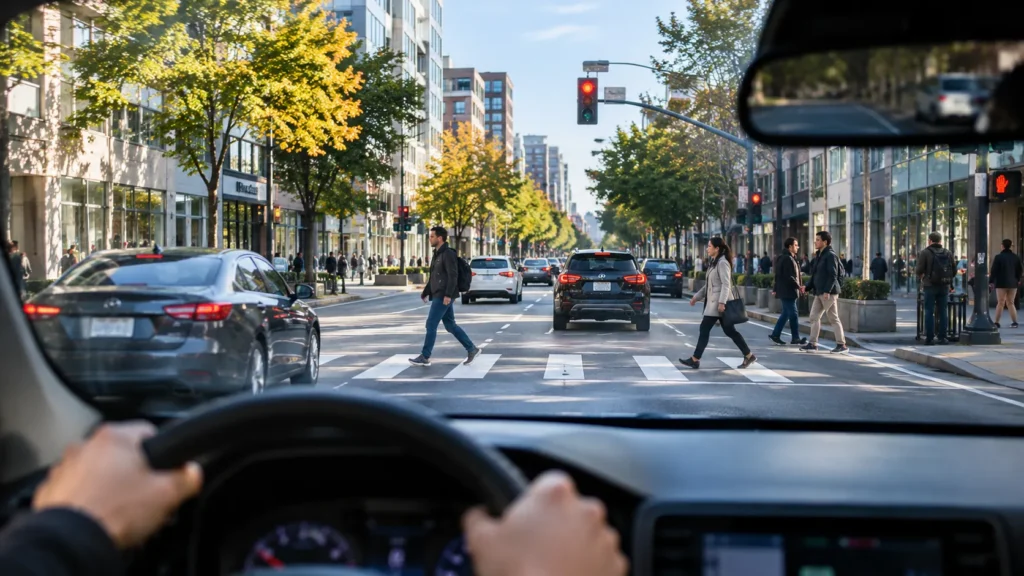
AAA worked with the Automobile Club of Southern California’s Automotive Research Center to test four 2026 vehicles with manufacturer-identified intersection AEB as standard equipment. Researchers conducted 74 closed-course runs in controlled daytime conditions using a soft target vehicle, with multiple configurations intended to examine more than one type of intersection conflict.
In the standardized test, the equipped vehicle made a left turn across an oncoming vehicle’s path. All four test vehicles avoided collision. That is promising evidence of improvement in a well-defined scenario.
The harder result came when the test vehicle continued straight, and a target vehicle turned right from a perpendicular roadway into its path. Three of the four systems did not prevent a collision. AAA also examined changes to the left-turn scenario, including whether a turn signal was active and whether steering was performed manually.
These results belong to AAA’s November 12, 2026 research announcement. They describe four tested vehicles under specified conditions, not the performance of every car or every possible intersection.
Why One Turn Can Be Easier for a System Than Another
Intersection crashes are not all alike. A predictable left-turn path can differ significantly from a vehicle suddenly emerging from the right. The approach angles, speeds, visibility, and available braking distance change how much time a system has to identify a threat.
Software also needs to decide which object represents a real collision risk. A car on a perpendicular street may be stopped, crossing, turning, or merely waiting. Applying the brakes unnecessarily could create its own problems, yet waiting too long can leave insufficient distance to avoid impact.
Testing standards matter because manufacturers may optimize performance for scenarios commonly included in assessment programs. Euro NCAP’s safety-assist protocols provide examples of defined crash-avoidance tests. Passing one test does not establish that a vehicle can handle every variation drivers encounter in daily traffic.
Why Intersection Safety Matters So Much
Intersections bring together road users traveling in different directions. Left turns, right turns, through movements, cyclists, and pedestrians create opportunities for paths to cross. Even when drivers obey signals, a small gap in observation or a mistaken prediction can have serious consequences.
According to the Federal Highway Administration’s intersection safety overview, roughly one-quarter of U.S. traffic fatalities and about half of traffic injuries are associated with intersections. Those proportions help explain why researchers want braking systems to address more than rear-end crashes.
Infrastructure remains important. Better signal timing, clearer sightlines, reduced turning conflicts, and protected pedestrian crossings can reduce hazards even in vehicles without advanced sensors. The FHWA’s Safe System intersection guidance emphasizes road design that anticipates human mistakes and limits the consequences.
Does This Mean Automatic Emergency Braking Is Failing?
No. AEB has demonstrated benefits in the crash types it was originally designed to address. The Insurance Institute for Highway Safety reports real-world reductions associated with front crash prevention and other avoidance features.
AAA’s new findings are about the boundaries of intersection-specific performance. In fact, they show progress compared with AAA’s 2022 evaluation of vehicles that did not have manufacturer-identified intersection AEB functionality. In that earlier research, the systems did not prevent the tested intersection conflicts. The 2022 AAA research provides useful historical context.
The lesson is to treat AEB as an additional safety layer, not a promise. An alert might appear late, a sensor may have a restricted view, and a system may not recognize every approach angle. Drivers must remain prepared to brake, steer, or wait for a safer gap.
What Drivers Should Do at Unprotected Left Turns
At an unprotected left turn, do not assume the vehicle will recognize and stop for oncoming traffic. Scan the intersection for opposing vehicles, pedestrians, bicycles, and motorcycles. Look for approaching vehicles that might change speed or enter from a side street. Keep the wheels straight while waiting when appropriate and follow local traffic rules.
AAA recommends staying attentive and being ready to brake when approaching an intersection. Avoid treating a dashboard warning as a substitute for checking the full scene. If visibility is obstructed, wait until you can assess traffic safely.
The same awareness applies when traveling straight. A vehicle that turns out from a side road may create a conflict your AEB system cannot resolve in time. Drivers should control speed and maintain space rather than assume the technology will compensate.
What Happens When a Crash Occurs Despite AEB?
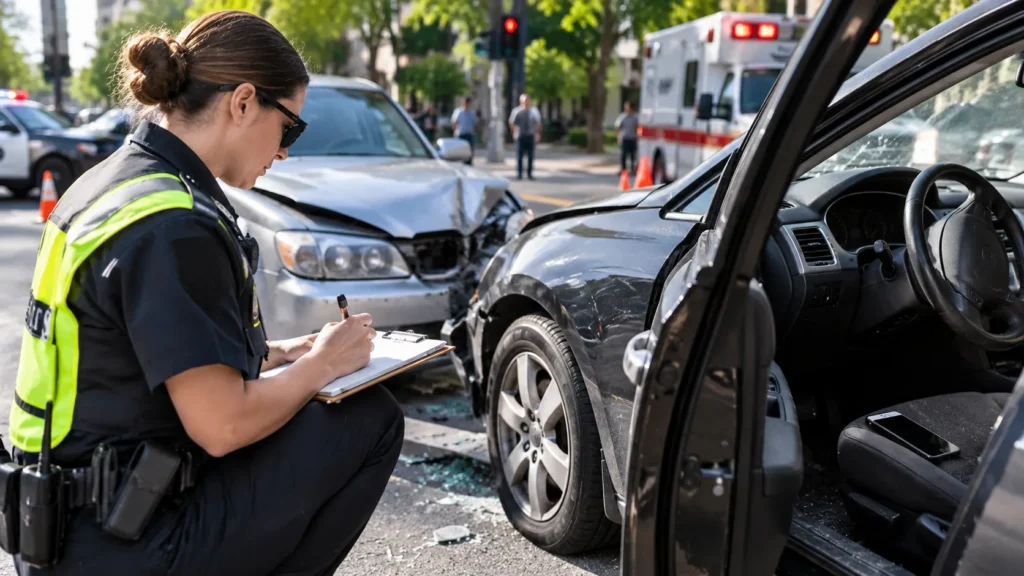
When a vehicle with intersection AEB is involved in a collision, a key question is what the system detected and what the driver did. An automatic braking feature being present does not prove that it was active, that its operating conditions were satisfied, or that a malfunction occurred.
Investigators may review driver statements, photographs, vehicle damage, signal timing, camera footage, event data recorder information, and available diagnostic records. Some vehicles retain information about braking and warnings, but what is stored varies. A missing alert in a driver’s recollection does not establish a software fault.
Video can help document the sequence. Your site’s guide to red-light camera evidence in intersection accidents discusses the value and limitations of roadside recordings. A separate dashcam evidence guide covers preservation and authentication.
Can V2X and Roadside Cameras Help?
Other emerging technology may eventually fill some of the blind spots around intersections. Vehicle-to-Everything communication, or V2X, could share information from nearby cars and roadside equipment. It is different from AEB, which makes braking decisions using the vehicle’s systems.
Readers can explore this connection in our V2X technology guide. Our article on AI road cameras and near-miss detection explains how infrastructure monitoring can identify dangerous patterns.
Those technologies do not eliminate the need for better braking performance. They may provide additional information or help planners redesign an intersection where repeated near-misses occur.
What to Check Before Trusting Your Vehicle’s Safety Features
Vehicle owners should read the manual for the exact model and trim, not rely on a generic description of automatic emergency braking. Look for operating speeds, sensor limitations, activation requirements, and whether intersection assistance is listed as a separate feature.
Keep cameras and radar areas clean and address warning lights promptly. After windshield replacement, body repairs, or sensor damage, follow manufacturer guidance for inspection and calibration. Software updates may change system behavior, but they should not be assumed to fix every limitation documented in testing.
When comparing vehicles, examine both collision-avoidance assessments and overall crash protection. NHTSA’s AEB safety rule announcement describes federal requirements for forward vehicle and pedestrian protection, which should not be confused with a guarantee of full intersection coverage.
The Bottom Line
AAA’s November 2026 tests show that intersection AEB is improving but remains scenario-dependent. Four tested vehicles avoided the standardized left-turn collision, while three could not prevent a vehicle turning into their path from a side road. Neither result should be applied to every car without further testing.
Drivers can benefit from modern crash-avoidance features while recognizing their limits. Safe speeds, clear observation, patient turning decisions, good roadway design, and reliable evidence remain essential. Technology may help prevent the next crash, but it does not make intersection judgment optional.