
Tesla Robotaxi technology is becoming one of the biggest developments in the automotive industry in 2026. Fully autonomous ride-sharing vehicles are now operating in select cities, raising new questions about accident liability, passenger safety, insurance claims, and road regulations.
As self-driving technology expands, concerns surrounding Tesla Robotaxi accidents are also growing. Drivers, passengers, pedestrians, and insurance companies are all adapting to a future where artificial intelligence controls more vehicles on public roads.
What Is Tesla Robotaxi Technology?
Tesla Robotaxi vehicles are autonomous cars designed to operate without direct human control. These vehicles use cameras, sensors, artificial intelligence, and machine learning systems to navigate traffic, recognize hazards, and transport passengers.
The concept is part of Tesla’s broader Full Self-Driving initiative. According to Tesla AI, the company continues to develop neural networks capable of handling complex driving situations.
Unlike traditional rideshare services, Robotaxis may not require a human driver behind the wheel. This creates entirely new legal and safety discussions, especially when accidents occur.
Readers interested in evolving vehicle safety technology may also enjoy our article on smart accident detection systems.
Why Tesla Robotaxi Accidents Are Getting Attention
Self-driving vehicles remain under heavy public scrutiny. Every collision involving autonomous technology attracts attention because these systems are expected to reduce human error.
However, real-world driving conditions remain unpredictable. Construction zones, poor weather, aggressive drivers, and unexpected pedestrian movements continue to challenge AI-based driving systems.
According to the National Highway Traffic Safety Administration, autonomous vehicle safety investigations remain ongoing as more self-driving systems enter public roads.
Several incidents involving Tesla Full Self-Driving systems have already raised concerns about how AI reacts in emergencies. Robotaxi services may increase those concerns because vehicles operate with minimal or no driver intervention.
Who May Be Responsible After a Robotaxi Crash?
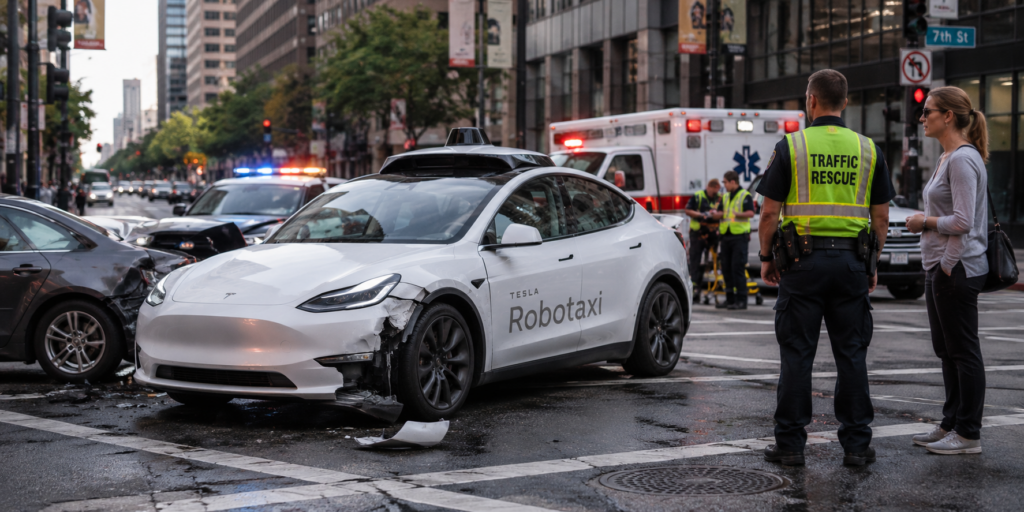
Liability in a Tesla Robotaxi accident may become more complicated than a traditional car crash. In standard accidents, fault often involves one or more drivers. Autonomous vehicles introduce additional parties that may potentially share responsibility.
Possible liable parties may include:
- The vehicle manufacturer
- The software developer
- The rideshare platform operator
- Maintenance providers
- Other motorists involved in the collision
Questions may arise regarding whether the AI system failed to detect hazards properly or whether another driver caused the crash. According to Consumer Reports, autonomous systems still require extensive evaluation in unpredictable environments.
How AI Systems Respond During Accidents
Tesla Robotaxi systems rely heavily on real-time data processing. Cameras continuously scan surrounding traffic while onboard AI attempts to predict movements and avoid hazards.
In some situations, autonomous systems may react faster than human drivers. However, AI systems can still encounter limitations involving unusual road conditions, emergency vehicles, or rapidly changing traffic patterns.
The Insurance Institute for Highway Safety states that advanced driver assistance systems continue improving, but they are not perfect replacements for human awareness.
Even minor software delays or sensor obstructions may affect how the vehicle responds during emergencies.
Insurance Challenges Involving Robotaxis
Insurance companies are now adapting policies to account for autonomous driving technology. Traditional insurance models are built around human driver behavior, but Robotaxi services shift some responsibility toward manufacturers and technology providers.
Some insurers are exploring AI-based risk models that analyze software performance, driving data, and system reliability.
Questions surrounding insurance coverage may include:
- Whether the passenger carries responsibility
- If the rideshare operator provides coverage
- How software malfunctions affect claims
- Whether traditional auto insurance policies apply
The Forbes insurance guide for self-driving cars explains that insurance frameworks are still evolving alongside autonomous technology.
Pedestrian and Cyclist Concerns
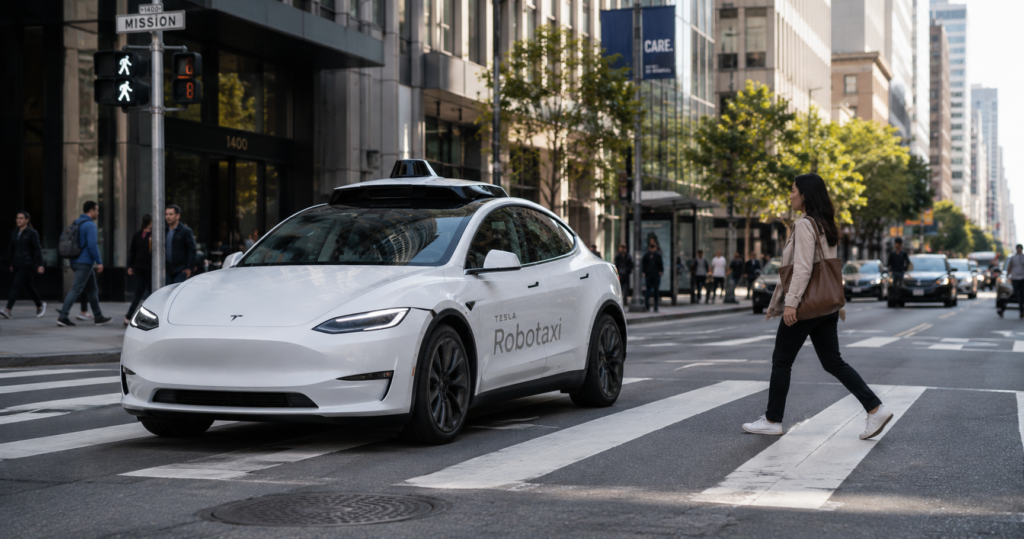
One major concern surrounding autonomous vehicles involves interactions with pedestrians and cyclists. Urban environments often include unpredictable movements that challenge AI systems.
Pedestrians crossing outside designated areas, cyclists weaving through traffic, and sudden obstacles may create situations where the Robotaxi must react instantly.
The SAE International automotive safety research highlights how machine learning systems continue evolving to improve object recognition and hazard prediction.
Still, critics argue that widespread Robotaxi deployment may move faster than safety regulations can adapt.
Government Regulations and Safety Oversight
Federal and state agencies are closely monitoring autonomous vehicle operations. Regulators are reviewing safety data, crash reports, and software updates to determine whether current rules adequately protect the public.
Some cities have introduced restrictions on autonomous rideshare operations until further testing is completed. Others are embracing the technology as part of future transportation planning.
According to the U.S. Department of Transportation, autonomous vehicle regulations continue evolving as more companies expand testing programs.
Legal standards surrounding accident reporting, software transparency, and driver monitoring may continue changing throughout 2026.
How Robotaxis May Change Future Accident Investigations
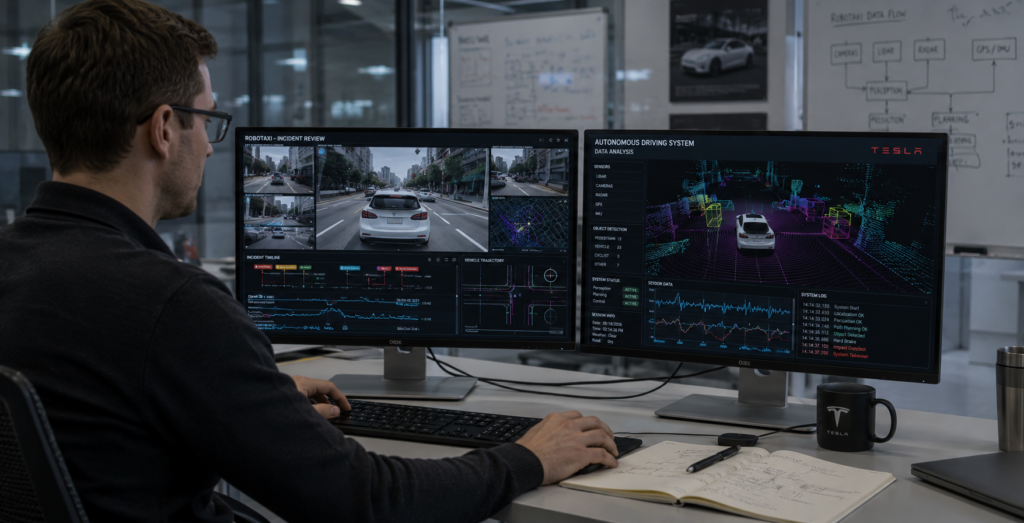
Tesla Robotaxis generate enormous amounts of digital data. This may include:
- Camera footage
- GPS tracking
- Vehicle speed records
- Sensor activity logs
- AI decision-making data
This information may significantly influence future accident investigations. Instead of relying entirely on witness statements, investigators may review detailed digital records showing how the vehicle responded before impact.
Our readers who follow evolving vehicle technology trends may also enjoy our coverage of AI dashcams and smart crash detection.
The Future of Autonomous Transportation
Tesla Robotaxis represent a major shift in how transportation may function in the future. Supporters believe autonomous vehicles could eventually reduce traffic fatalities caused by distracted or impaired driving.
Critics argue that self-driving technology still faces serious reliability challenges. Public trust may depend heavily on how companies handle safety concerns, accident transparency, and software accountability.
As autonomous systems become more common, drivers and passengers may continue adjusting to new legal and safety realities surrounding AI-powered transportation.
Conclusion
Tesla Robotaxi accidents are becoming an increasingly important topic in 2026 as autonomous transportation expands across public roads. Questions involving liability, insurance, pedestrian safety, and AI reliability continue shaping discussions around this technology.
While autonomous systems may offer benefits, they also introduce new challenges that regulators, manufacturers, insurers, and everyday drivers are still learning to navigate.
The future of transportation may depend on how effectively companies balance innovation with public safety and accountability.